Unlimited application potential.
Specialized for engineering applications.
High-performance and certified materials
Over 300 materials to choose from.
From polymers to composites to metals.
Felipe Castaneda
June 22, 2026Updated June 22, 2026
In order to get the most out of your 3D printer, you need to align the material you are using with the requirements of your application. This is especially true when creating high-performance parts such as those enabled by carbon fiber. In this post, we will be zooming in on the practical applications of 3D printed carbon fiber composites across multiple categories in order to explore how this unique material is driving efficiency and precision in everything from welding to robotic automation.
The following are four example applications that are well served by the unique properties that carbon fiber offers:

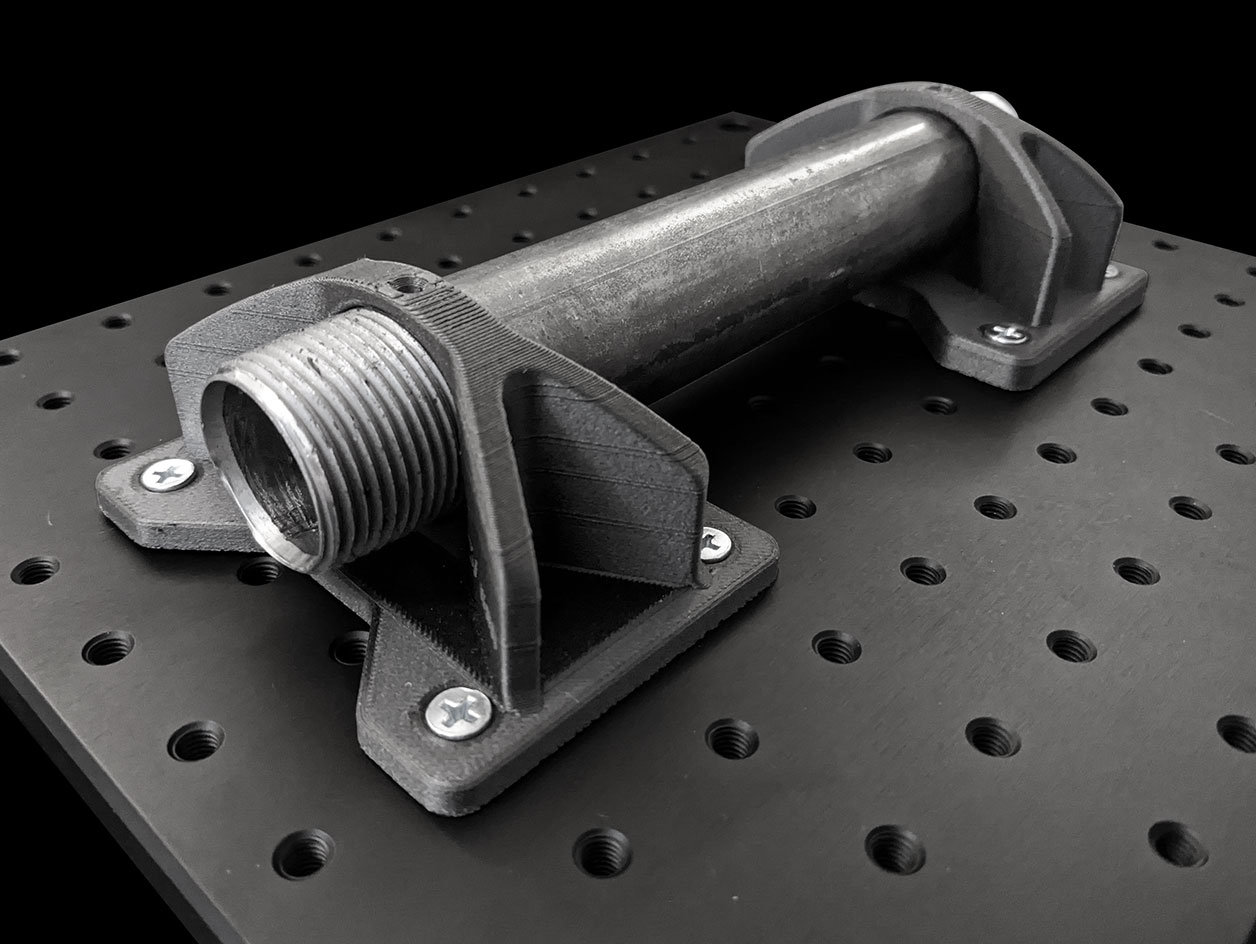
In the realm of welding, precision and accuracy are paramount. Custom fixtures, specifically designed to hold the pieces together before the welding process, play a crucial role. These fixtures need to be sturdy and heat-resistant, given the high temperatures involved in welding.
One of the advantages of 3D printing with carbon fiber is that it’s possible to create custom fixtures that meet these stringent requirements. The high heat deflection temperature and rigidity of the new UltiMaker PET CF after annealing, in particular, makes it perfect for the task. The ability to design these fixtures in CAD and print them directly reduces labor time and ensures a tight tolerance fit, improving the overall efficiency and quality of the welding process.

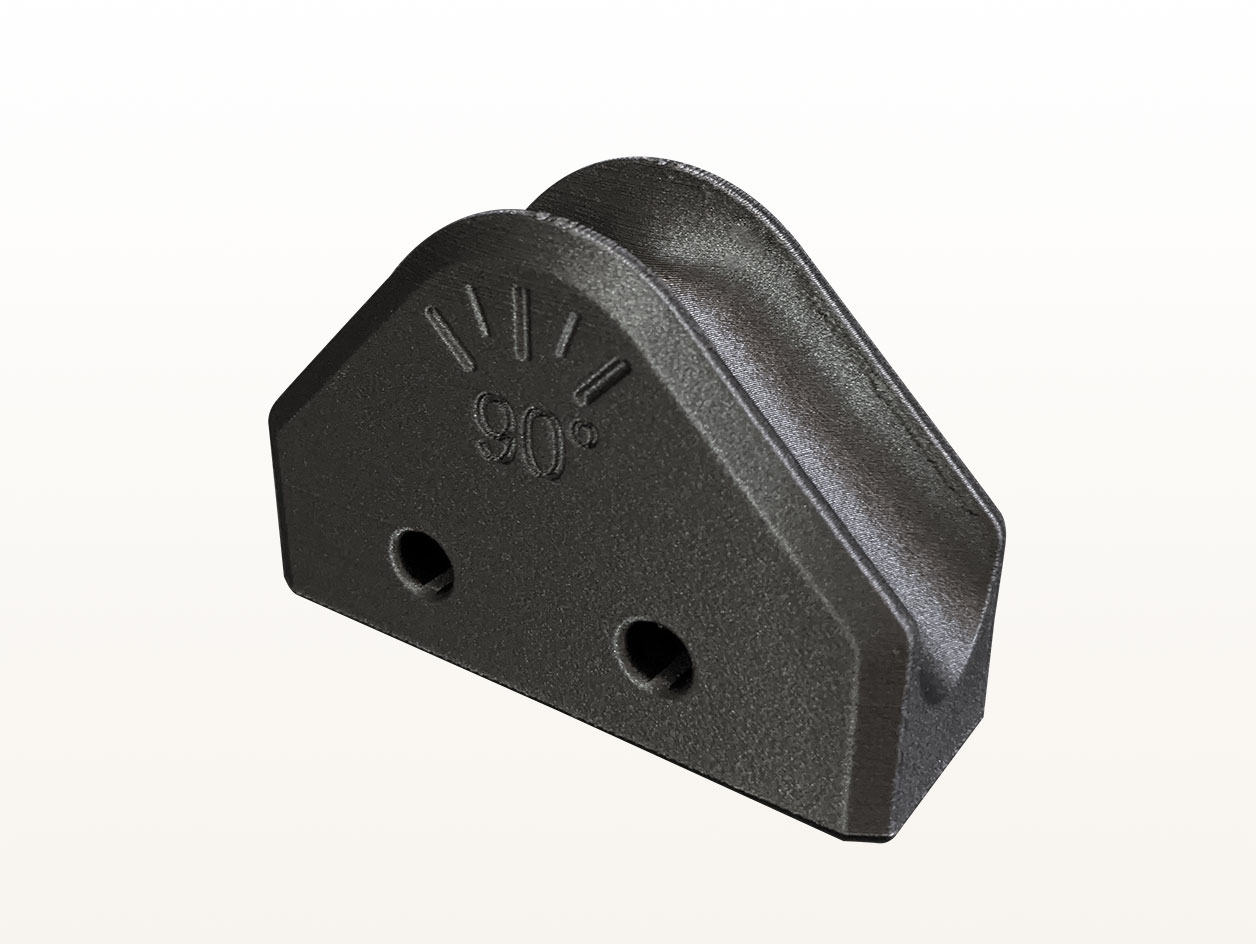
Bending dies are crucial tools used with a hydraulic press to shape and form metal parts. Depending on the job specifics or facility requirements, these parts may need frequent customization. Traditional manufacturing methods can be time-consuming and costly for such instances.
With 3D printing technology, you can create custom bending dies quickly and efficiently. Carbon fiber composites stand out as the material of choice here, thanks to their exceptional rigidity. This means the part can hold its form under more pressure than many other polymers, ensuring the die maintains the intended shape and produces accurate, high-quality metal parts.

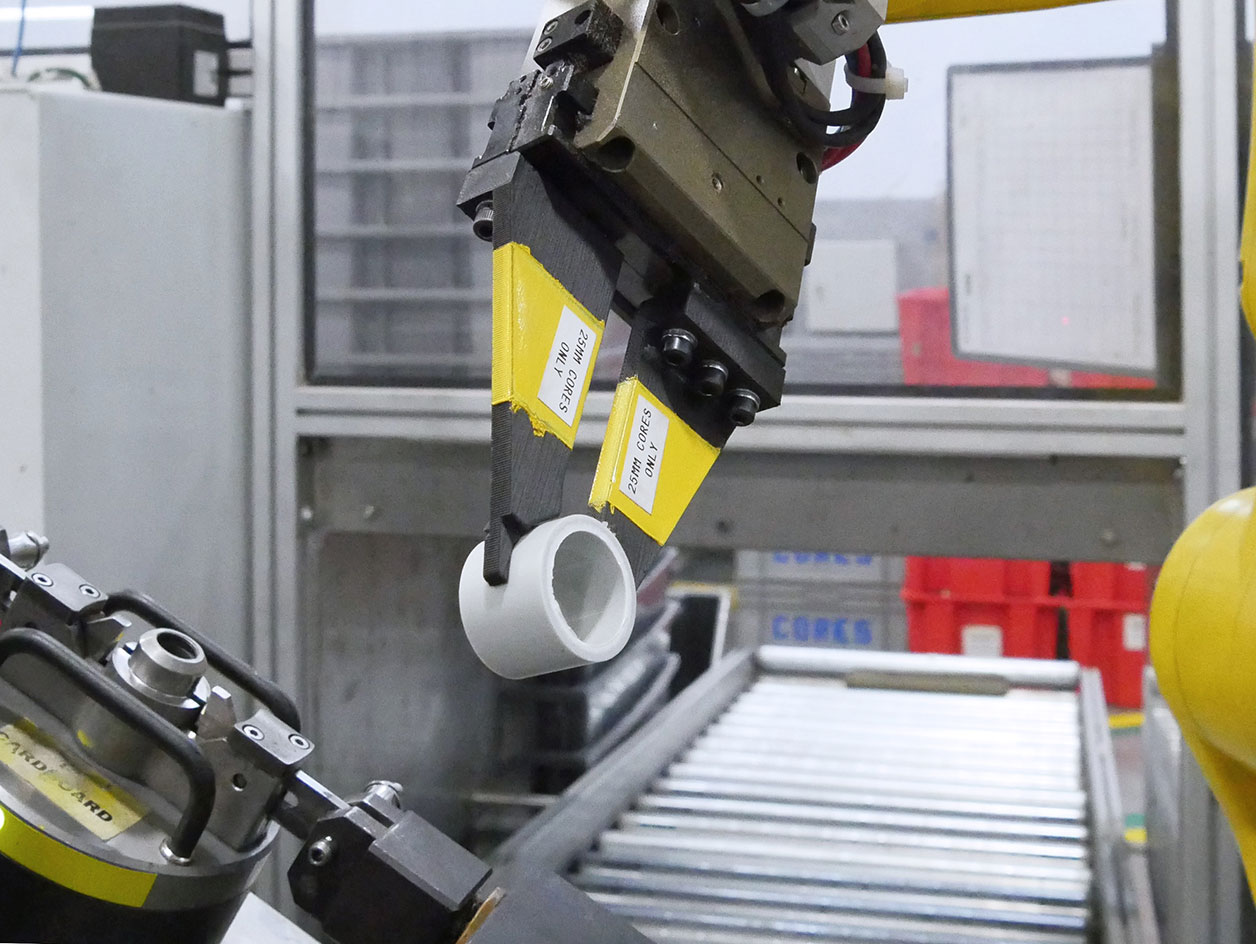
In the field of manufacturing automation, robotic arms are invaluable tools for performing repetitive tasks with exceptional precision. The tools at the end of these arms, known as end effectors, can vary greatly depending on the specific application, from gripping devices to welding torches.
The ability to 3D print these end effectors with carbon fiber composites presents a game-changing opportunity. The lightweight nature of carbon fiber composite reduces the overall weight of the robotic arm, increasing its payload capacity, speed, and maneuverability. This not only enhances productivity but also extends the lifespan of the robotic arm by reducing wear and tear.

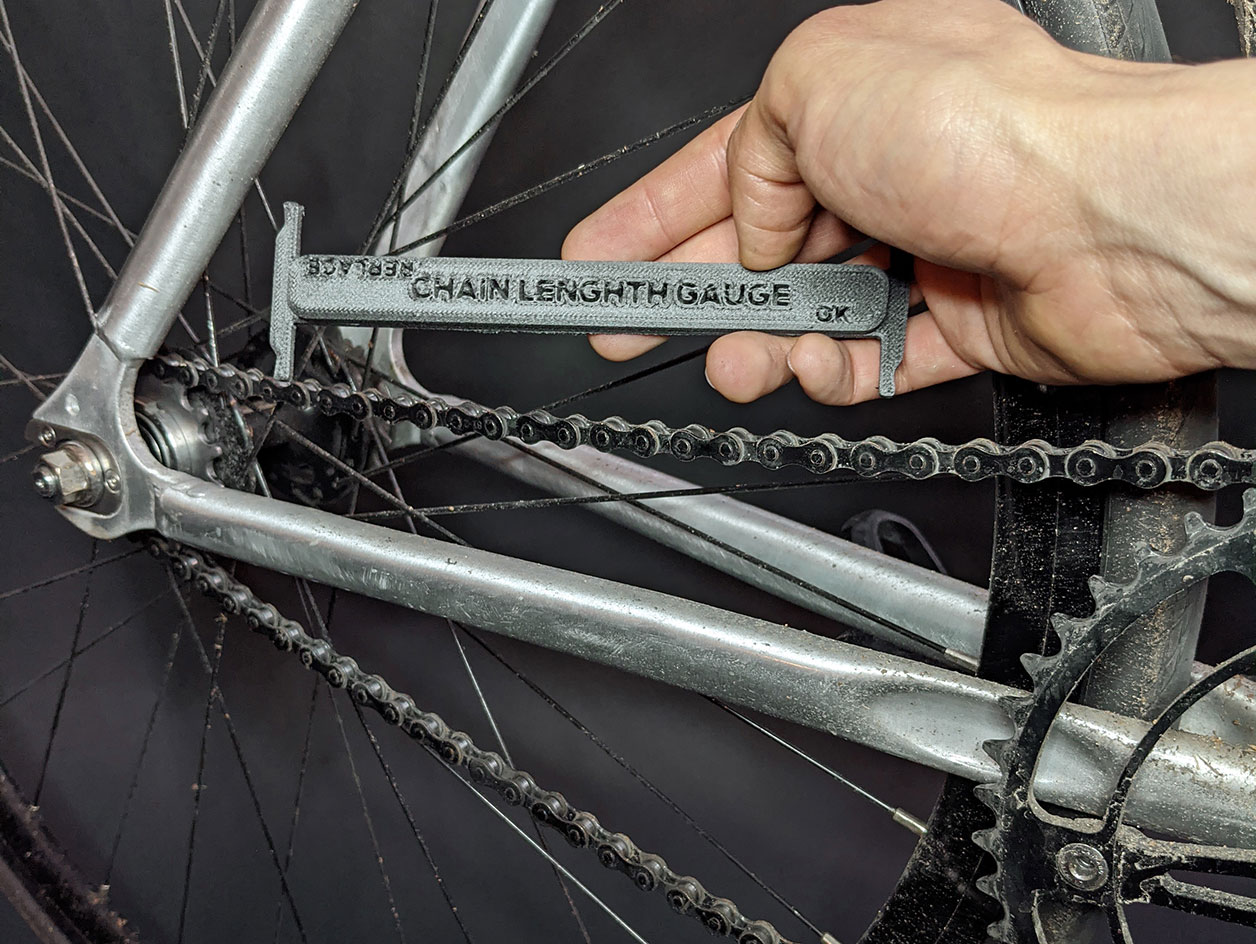
Alignment tools or gauges are used in manufacturing and assembly processes for quick and precise measurements. These tools need to be rigid to ensure they don’t flex or compress during measurements, which could lead to inaccuracies and inconsistent assemblies.
Carbon fiber composites, with their inherent rigidity, make an excellent choice for these tools. The ability to 3D print these tools means you can customize them for any specific measurement requirement, ensuring your manufacturing process is as accurate and efficient as possible.

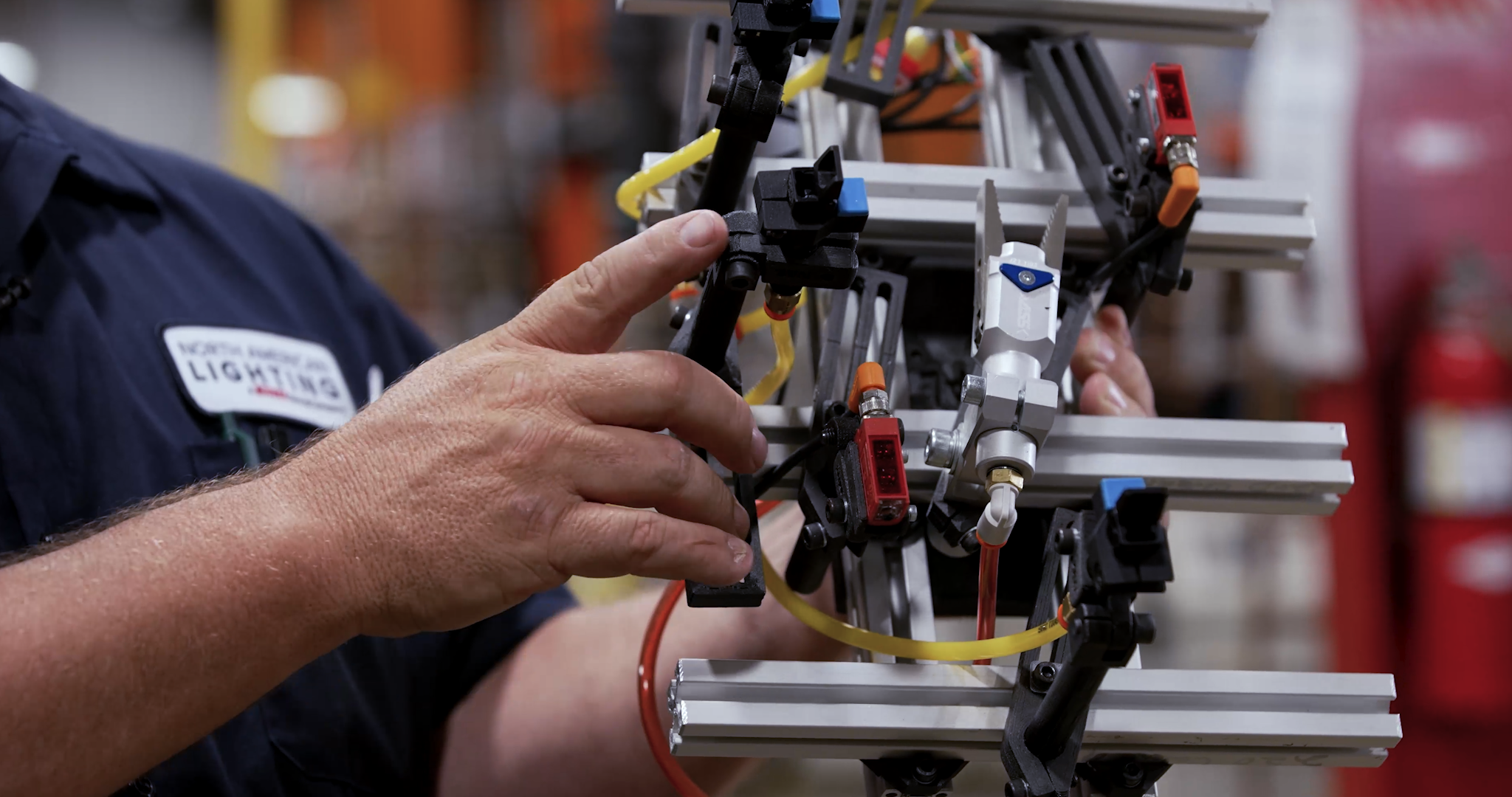
North American Lighting (NAL), a Koito Group Company, has been manufacturing automotive lighting systems for vehicle manufacturers since 1983. With eight facilities across the U.S., NAL provides advanced lighting technology, engineering design expertise, and state-of-the-art production capabilities.
For a manufacturer like NAL, which works with some of the largest automotive OEMs in America like Ford and GMC, speed and precision are critical. To that end, assembly production tools are essential to ensure that production continues smoothly. If a part breaks, that could mean extended lead times and added costs.
Primarily printed in carbon fiber and PolyMax™ PC, the nest blocks are lightweight and durable. Since printing them months ago, Griffith has not yet seen any wear on them. He is also experimenting with different materials, constantly finding things they would like to print. For example, camera mounts, grease tips, leak test seals, and more.
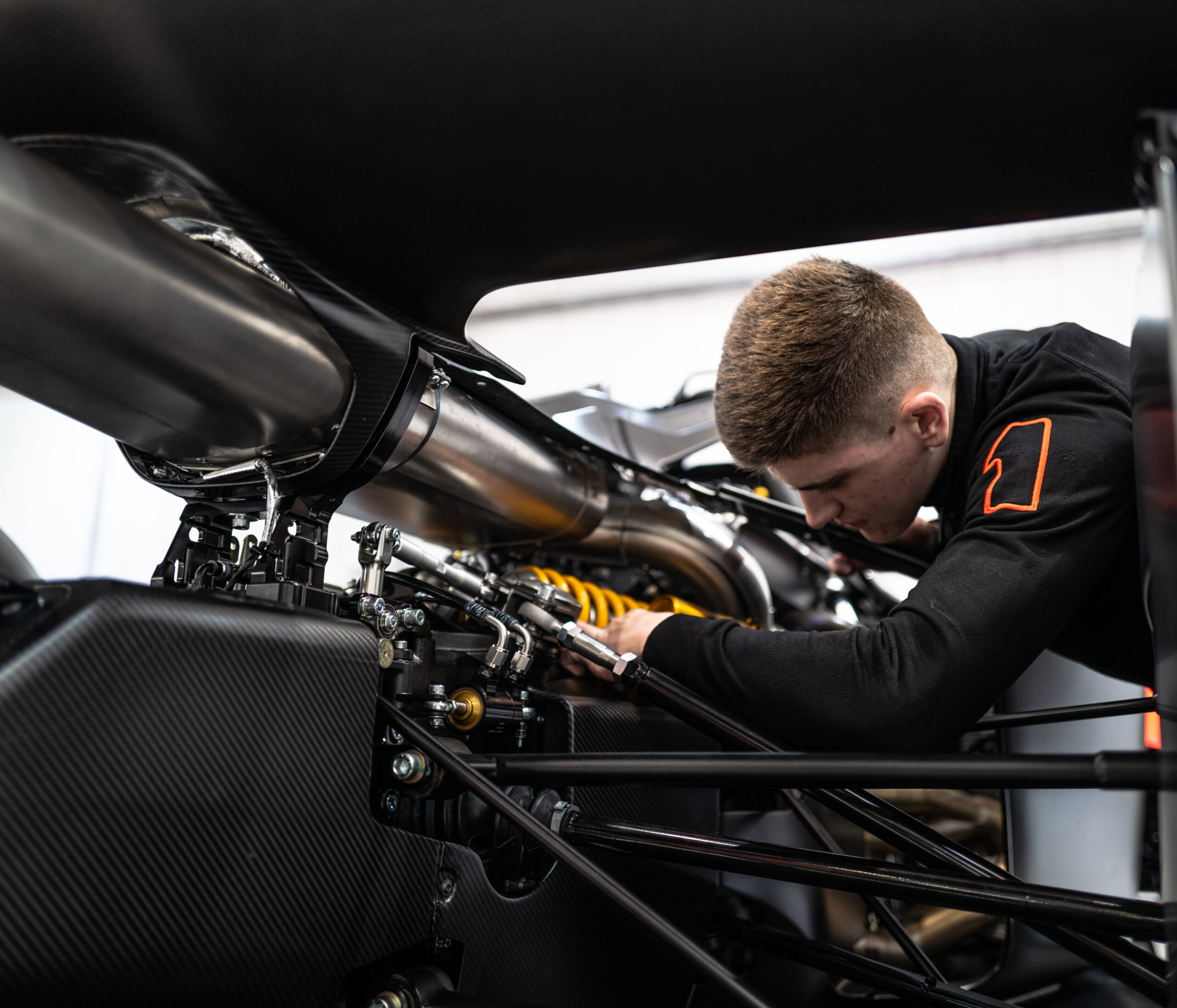
BAC transformed the automotive industry with the world’s first road-legal, single-seater supercar—the BAC Mono. BAC Mono was the realization of the brothers’ vision of a road vehicle that offers the most authentic and pure driving experience combined with the latest racing technology.
Always on the cusp of technological advancements, BAC acts as an incubator for the latest innovations and ground-breaking concepts within its pioneering research and development projects.
To that end, BAC was an early adopter of 3D printing. Since the company designs and manufactures the Mono R for sports car enthusiasts and collectors, it produces small-batch bespoke parts. As a result, CNC machining or injection molding was unnecessary for this level of production.
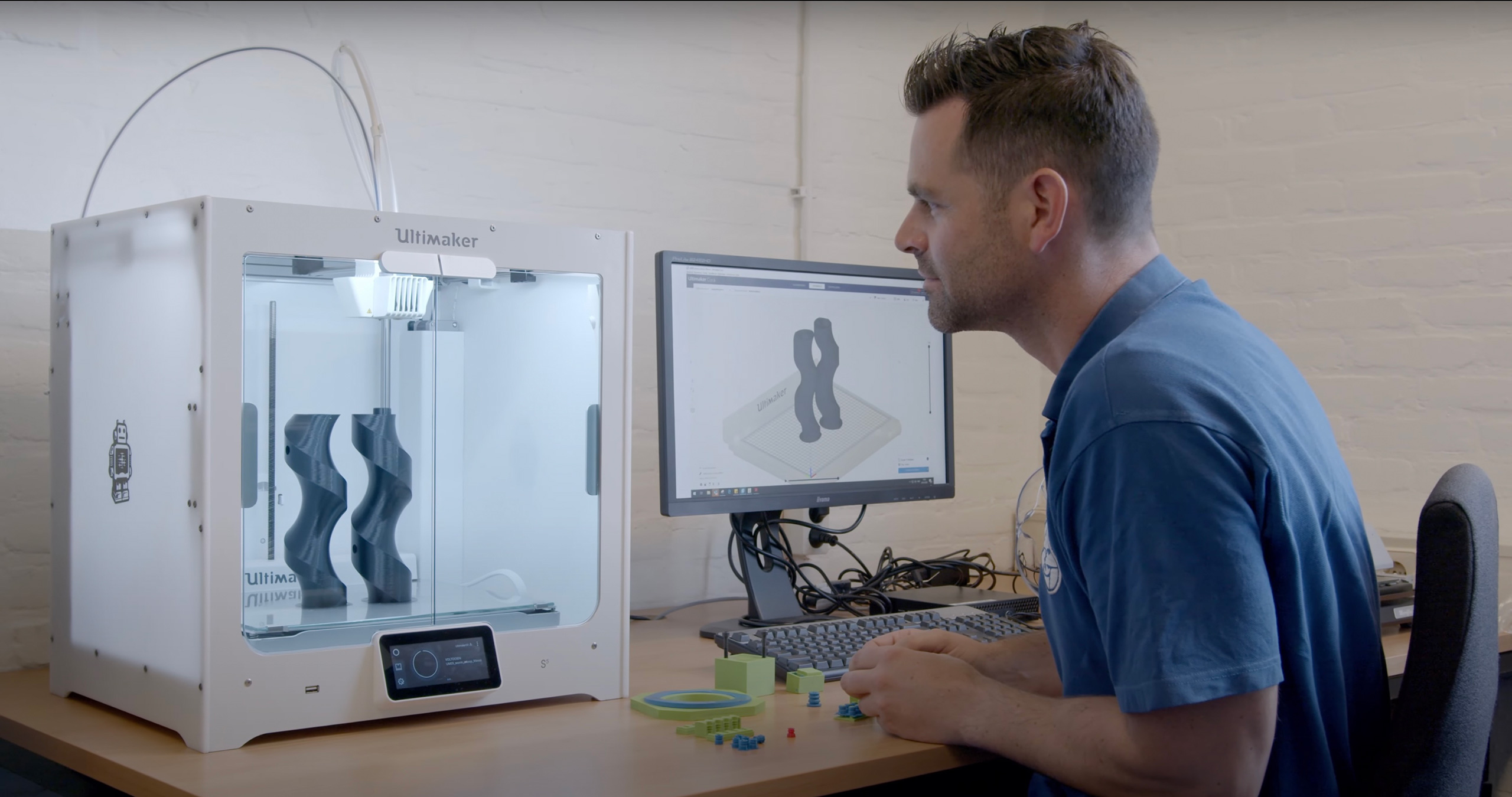
The original part for Trivium's packaging machine had worn out and was no longer available from the supplier. Therefore, Paul Klopper, one of the Technical Specialists at the Dutch plant turned to 3D printing for a solution.
He remodelled the part and split it in two pieces so they could be printed together on the Ultimaker S5 build plate. He then connected the two pieces with a metal rod so it could be installed on the machine.
Design validation was achieved with an ABS print. However, this wore out at a similar rate to the original part. On his next iteration, Paul printed the worm in carbon fiber-reinforced nylon, which proved to be a more wear resistant replacement part than the original.
This perfectly demonstrates the power of 3D printing with different materials. You can begin testing with a low-cost material such as Tough PLA or ABS to validate the design. And then switch to an engineering-grade material to create a part with properties that outperforms the original.
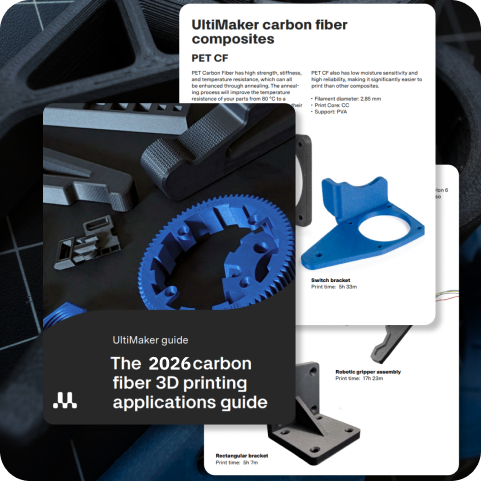
Discover how carbon fiber can help you build stronger, lighter, more durable parts - faster and more cost-effectively.
Download the guideThis website uses cookies and similar technologies for website operation, analytics, improving your experience, and, where applicable, advertising or marketing purposes. By clicking “Accept all,” you consent to our use of non-essential cookies as described in our Privacy Policy. If you do not consent to non-essential cookies, please click “Reject.” You can manage your cookie preferences at any time by clicking “Manage.” You may withdraw your consent at any time. Learn more.
To monitor the performance of our site and to enhance your browsing experience.
To understand user behavior in order to provide you with a more relevant browsing experience or personalize the content on our site.
To personalized and measure the effectiveness of advertising on our site and other websites.