Questa pagina viene visualizzata in inglese in quanto non è disponibile nella lingua selezionata.
- Industrial goods
- Manufacturing aids
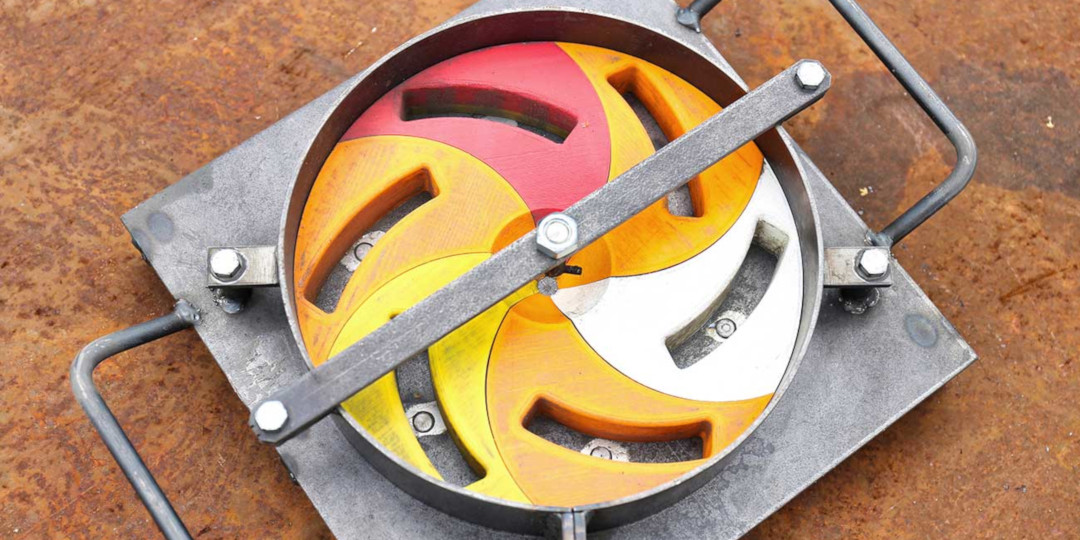
Průmyslová keramika is one of central Europe’s leading suppliers of ceramic mixes and custom heat-resistant parts. The Czech company switched from traditional production methods in 2016 and began creating mold inserts using Ultimaker 3D printers. This meant that refractory mold cores could be manufactured five times faster, at 10% of the cost, and with perfect repeatability.
Průmyslová keramika which translates to “industrial ceramics” was founded in 1991. Its 75 employees now produce over 9,500 tons of ceramic mixes and almost 1,600 tons of shaped pieces each year – with an annual turnover of 220 million Czech crowns ($9.8 million USD).
The company’s success lies in its agile response to customer requirements. Each order for a ceramic part is unique, requiring a unique mold design. And it was this demand for constant customization that led their production team to consider additive manufacturing technology.
Accurate, bespoke industrial manufacturing
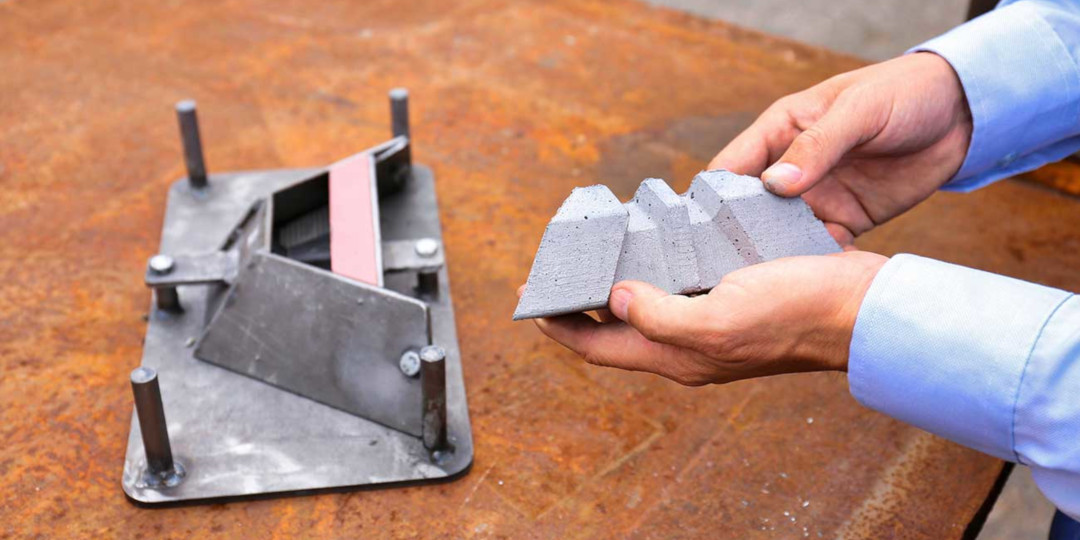
Molds are commonly created with a steel shell, which forms the outer shape. Core inserts then define important internal and functional details, like grooves, holes, and curves. These fittings are often complex shapes, which must be designed and manufactured to precise customer specifications. In the past, such internal shapes were created using wood or metal inserts. But these required manual carpentry or CNC machining – processes which were time consuming and expensive. For example, one wooden insert could cost up to 20,000 Czech crowns ($895 USD), and take more than 30 hours to carve.
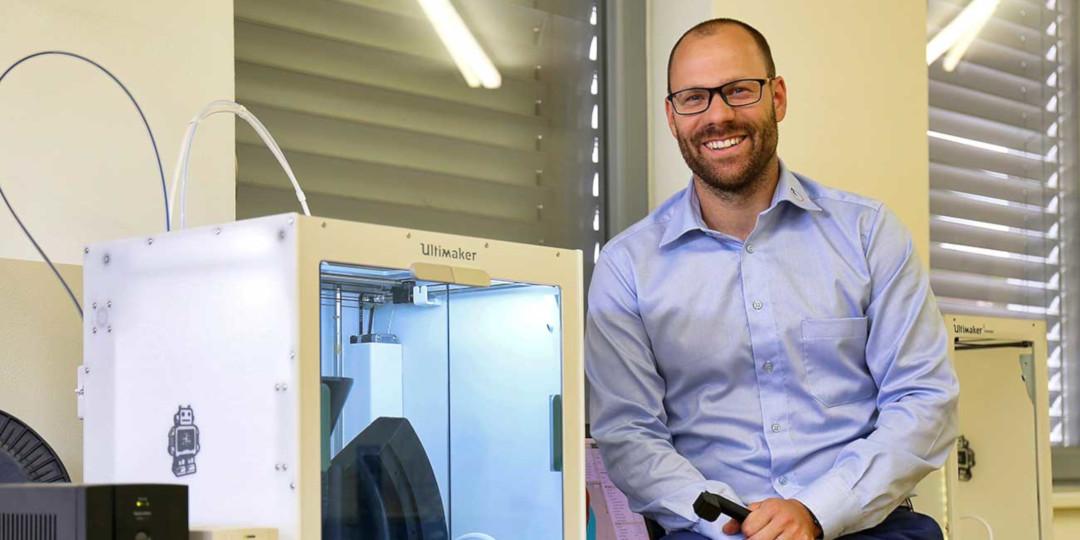
During 2013, the management team piloted a 3D printing project in an effort to accelerate mold production, but they ran into trouble with their first 3D printer. "We were struggling with extreme printer misbehavior”, says Jakub Cvilinek, Průmyslová keramika’s Managing Director. “Only about 30% of the prints were successful, the rest was waste. Even after this experience, we believed in 3D printing. It was a great school for us. The technology was still good for us – we just chose the wrong printer."
Reinventing the mold-making workflow with Ultimaker 3D printers
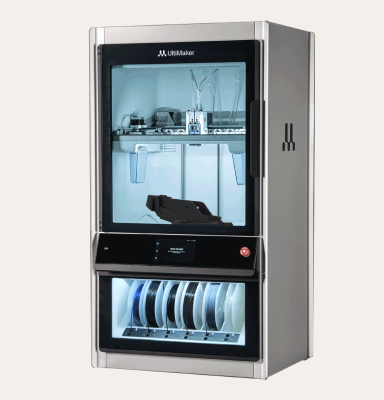
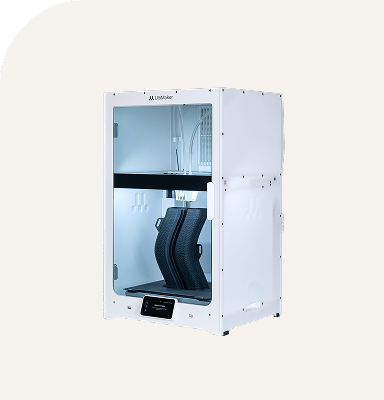
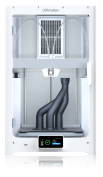
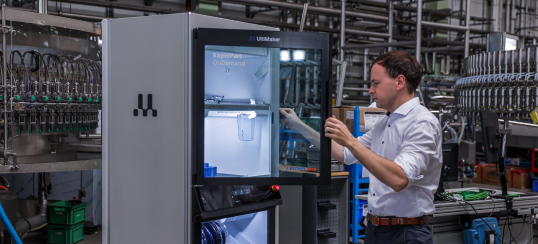
In 2016, Průmyslová keramika chose what turned out to be the right 3D printer: an Ultimaker 3 Extended. Finally, the company had found a reliable and professional 3D printing solution. Two years later, Jakub Cvilinek added a new Ultimaker S5 to their toolkit, delivering the same print quality, but with a bigger build volume behind an easier user interface.
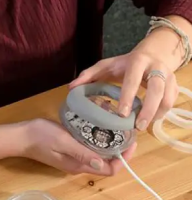
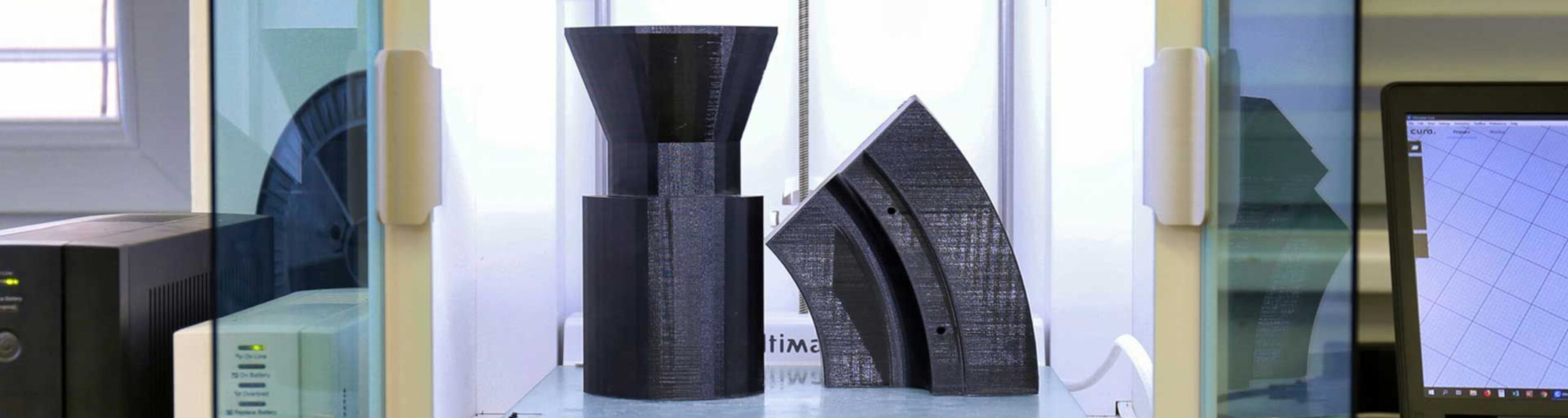
As the team took advantage of 3D printing to make cores and mold inserts, the technology’s benefits emerged: accurate, fast, and repeatable production – coupled with almost complete creative freedom in designing parts. Best of all, the solution was significantly cheaper than previous processes.
For 3D printing mold cores, Průmyslová keramika use only PLA material because of its ease of use and low glass-transition temperature. This is because many of the core parts and inserts remain embedded in the ceramic material until it is fired. At more than 900 °C, the PLA is then easily and completely removed from the mold.
The company employs two operators who oversee the 3D printing of production parts, which are designed by their engineering department, using Autodesk Inventor and AutoCAD.
3D printing accelerates and facilitates production
"The Ultimaker 3 Extended and S5 have brought us substantial savings and acceleration of production, as well as the ability to produce shapes that were previously impossible,” recalls Jakub Cvilinek.
In Průmyslová keramika, 3D printing has proven to be a great asset for the manufacturing process. Required parts can now be manufactured roughly up to five times faster and ten times more cheaply than using traditional processes. For example, the material used to 3D print a mold core for an air and gas mixer in an industrial burner costs only 300 Czech crowns ($13.43 USD). This meant that it only took a few months for the ceramics specialist to achieve ROI against the Ultimaker 3D printers’ initial purchase cost.
With reduced dependence on a CNC-milling machine, the company also saved on the cost of employment. It now benefits from on-site production, fast prototyping, high uptime, and (whenever necessary) repeatable production.
Conclusion: 3D printing offers a new level of design freedom
For Průmyslová keramika, the addition of the Ultimaker 3 and Ultimaker S5 has transformed their custom-manufacturing workflow. They now have confidence in their ability to produce parts that meet or exceed their customers’ demands. Jakub Cvilinek adds:
Some particularly complex mold core shapes for refractories were either not manufacturable or too costly by traditional methods. Thanks to 3D printing we can prepare them ourselves.
Could your production processes benefit from Ultimaker 3D printers? Learn more about the Ultimaker S5.
This story was originally published here, and was translated and edited with permission.

Read more customer success stories
Idea Reality: Rapid prototyping and the art of failing forward
Product design and development studio Idea Reality is using 3D printing to reduce costs and save time in bringing consumer-targeted projects to market.
- Product development
Schubert: A digital warehouse for on-demand manufacturing
Schubert uses 3D printing to deliver tools for its future-proof, high-performance packaging machines, making them even more versatile and easy to operate.
- Industrial goods
- End-use parts
Killa Design: 3D printing the buildings of tomorrow
Killa Design uses 3D printing to create iconic designs that are fast becoming landmarks – including one of the most complex structures ever built.
- Architecture
Heineken: Ensuring production continuity with 3D printing
Learn how Heineken increased line uptime and efficiency at its Seville brewery using 3D printing to create custom safety devices, tooling, and functional parts.
- Consumer goods
- End-use parts
Reducing costs and improving efficiency with the Ultimaker S5
IMI Precision Engineering, a leader in motion and fluid control technologies, use 3D printing to help create solutions that provide speed and precision for machinery.
- Industrial goods
Enhancing patient care with 3D printing at Jefferson Health
Jefferson Health, a hospital system located in Philadelphia, is at the forefront of healthcare technology, have integrated 3D printing into their Health+ Design Lab.
- Medical
3D printing custom refractory mold cores for industrial ceramics
Discover how a Czech industrial ceramics supplier benefits from Ultimaker 3D printers to create bespoke 3D printed refractory mold cores.
- Industrial goods
- Manufacturing aids
Ford: Reinventing efficient manufacturing using 3D printing
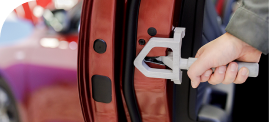
Ford has been working on creating an optimized workflow to create jigs, tools, and fixtures for Ford’s manufacturing process.
- Automotive / aviation
- Manufacturing aids
Royal Netherlands Air Force: Speeding up maintenance with 3D printed tools
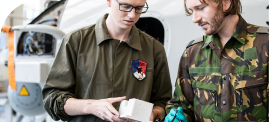
The Ultimaker 3D printers help mechanics of the Royal Netherlands Air Force to speed up the maintenance of helicopters, fighter jets and large cargo planes.
- Automotive / aviation
- End-use parts
Transforming the face of architectural design with 3D printing at KPF
The role of physical models within the architectural design process has evolved over the past few years. At firms like Kohn Pedersen Fox (KPF) desktop 3D printers enhance the day-to-day iterations of design and the three-dimensional understanding.
- Architecture
Owens Corning: Creating the perfect material profiles for customers’ solutions
To help customers get the best out of the XSTRAND™ range, Owens Corning collaborated with the engineers at Ultimaker to create optimized material profiles that are now available in Ultimaker Cura.
- Industrial goods
- Product development
New Lab innovators print their way to faster iterations and design freedom
In an era when startup incubators and co-working spaces spin up as a matter of course in densely populated urban centers, New Lab offers a fresh take on what it means to bring people and companies together to work under one large roof.
- Product development
Producing customized fashion solutions with Ultimaker 3D printers
Florenradica is a design company fabricating prototypes and end-use parts for fashion houses. After discovering 3D printing, they were interested in exploring it further, as it allowed them to realize products that were not possible with CNC machines.
- Consumer goods
- Product development
BOSEbuild: Accelerating design and testing phases with 3D printed parts
Learn how BOSEbuild took advantage of Ultimaker 3D printers to quickly and seamlessly prototype their latest build-it-yourself headphones, saving time and money through in-house iterations.
- Consumer goods
- Product development
Make Architects: From 3D print to award-winning building
Learn how Make Architects have transformed their model-making and prototyping process thanks to a suite of Ultimaker desktop 3D printers.
- Architecture
Empowering student innovation at the NYU Tandon School of Engineering
The NYU Tandon School of Engineering is more than just a resource for students who want to learn about the technology of today and tomorrow. It prepares students to be motivated and self-sufficient when tackling science and engineering issues.
- Education
3D printing for product development to cut costs and save time
Hartfiel Automation is a specialized high-tech provider of pneumatics, motion, and mobile control solutions. With the addition of an Ultimaker 3D printer to their product development process, Hartfiel Automation was able to save time and money while diversifying their services with product offerings...
- Industrial goods
- Product development
The Ultimaker S5 is here
We are proud to announce our most advanced 3D printer yet – the Ultimaker S5. Built for the office, the Ultimaker S5 is a powerful, reliable, and versatile 3D printer that delivers industrial-class results.
3D printing prototypes to save money and minimize risk
NoiseAware, the startup behind a noise monitoring and management system for high-risk, short-term rental properties, designed and prototyped their product with their in-house Ultimaker 3 printer. Saving thousands on the initial prototyping process for all parts, the NoiseAware team is able to create...
- Consumer goods
- Product development
Research on the benefits of 3D printing in a trauma hospital
3D printing is seeing increasingly widespread adoption in the medical field. It has already been used to visualize bone fractures, but pioneering researchers believe it can also be used to help treat trauma patients.
- Medical
3D printed puzzle breaks down braille barriers
For visually impaired people, learning to read braille is essential. But for many, braille learning devices are either too costly or ineffective. Now a 3D printed puzzle is making this vital skill accessible to all.
- Education
- End-use parts
A study in innovative design at the Cincinnati Art Museum
Dedicated to promoting inventive art-related exhibits and programs, the Cincinnati Art Museum is exploring the relationship between 3D printing and fashion by highlighting the work of designer Iris van Herpen.
- Consumer goods
3D printing and the jewelry boutique: A model for small business success
Cameron and Rebecca Stern, co-creators of Stern Design Works, bring together their innovative approach to traditional jewelry manufacturing with a fleet of Ultimaker professional desktop 3D printers.
- Consumer goods
- Product development
Exploring our galaxy – and beyond – with 3D printing
With the help of 3D printing, the communication team at NASA's Chandra X-ray Observatory makes it possible for inquisitive learners of all ages to hold supernovas right in the palm of their hand.
- Education
Casting metal parts for prototyping from 3D prints
Sylatech uses Ultimaker 3D printers to optimize their metal casting prototyping process. The accelerated placement of tooling orders and reduced number of tooling modifications result in significant time- and cost savings.
- Industrial goods
- Product development
Cost-efficient, functional prototypes for small bore motorcycle parts
With Ultimaker, MNNTHBX found a more efficient way to design and produce prototyped parts in the small bore motorcycling industry. By switching from traditional methods of manufacturing to 3D printing, the team replaced dozens of hours at the CNC mill and saw a 90% reduction in raw material cost.
- Automotive / aviation
- Product development
3D printing and the future of personalized fashion
For designer Jessica Joosse, the fourth industrial revolution is transforming fashion, and an Ultimaker 3D printer is the perfect tool to explore possibilities.
- Consumer goods
Farmshelf: Cost-effective custom parts for an urban farm system
By using Ultimaker 2+ 3D printers, Farmshelf was able to iterate designs and print hundreds of custom parts; far more quickly than other methods of fabrication.
- Consumer goods
- Product development
Taking architecture from dream to design with 3D printing
3D printed architectural models do more than simply provide tangible build site plans. These 3D prints show clients how key architectural features can bring the entire design to life.
- Architecture
An innovative 3D printing venture at Atlantic University College
With support from students knowledgeable in 3D modeling and CAD software, Professor Vicente Gasco has set out to send 3D printing-savvy graduates into the working world through courses featuring the latest technologies.
- Education
Faulkner Industrial: 3D printing the future of architectural design
Thanks to a streamlined digital-to-physical pipeline and a reliable Ultimaker desktop 3D printer, Faulkner Industrial is able to deliver architectural scale models at a fraction of the cost and turnaround time compared to competitors.
- Architecture
St. Matthew’s Episcopal Day Maker Lab: Inspiring through innovation
By providing a space for students to design, iterate, and print objects from their own imaginations, the St. Matthew’s Episcopal Day Maker Lab is able to amplify the learning experience in meaningful, impactful ways. Keep reading to learn more.
- Education
Entrepreneurship at MIT Launch: 3D printing for the future
The minds behind MIT Launch understand that there are limitless possibilities for 3D printing. By challenging students and encouraging innovation through the latest technologies, Launch is preparing young minds for the challenges that lay ahead.
- Education
Eram heels: 3D printing personalized shoes in-store
Have you ever been shopping for shoes and found it hard to get exactly the style you want? Now, with the help of a couple of Ultimaker 3D printers, fashion retailer Eram and Unistudio design studio are giving customers the power to create their own heels.
- Consumer goods
- End-use parts
Snow Business: 3D printing final parts for high-value snow machines
Snow Business is the world leader in snow and winter effects. The company uses their Ultimaker 3D printers for prototyping, functional testing, and creating final parts for their snow machines.
- Industrial goods
- End-use parts
Gantri: Shedding light on unique 3D printed designs
Prototyped and manufactured with an Ultimaker 2 Extended+ print farm, Gantri products celebrate traditional techniques bolstered by new technologies that save time and money for a passionate community of designers.
- Consumer goods
- Product development